
Beyond Comfort: Reading Moon Lines as Emotional Territory
A practitioner's notes on the most temperamental line in astrocartography

In years of doing this work, I've noticed that the clients most changed by their Moon line activations are never the ones who arrived expecting comfort. I say that as someone who has watched clients activate Venus lines that helped them recognize and move past patterns of overindulgence in love, and Mars lines that radically transformed their relationship with their own power. The Moon is different. It doesn’t arrive with Venus’s ease or Mars’s drive. It arrives with the demand of water. It asks how full your emotional container is before it gives you anything.
And what it gives you is not comfort, exactly. It’s something more like accuracy.
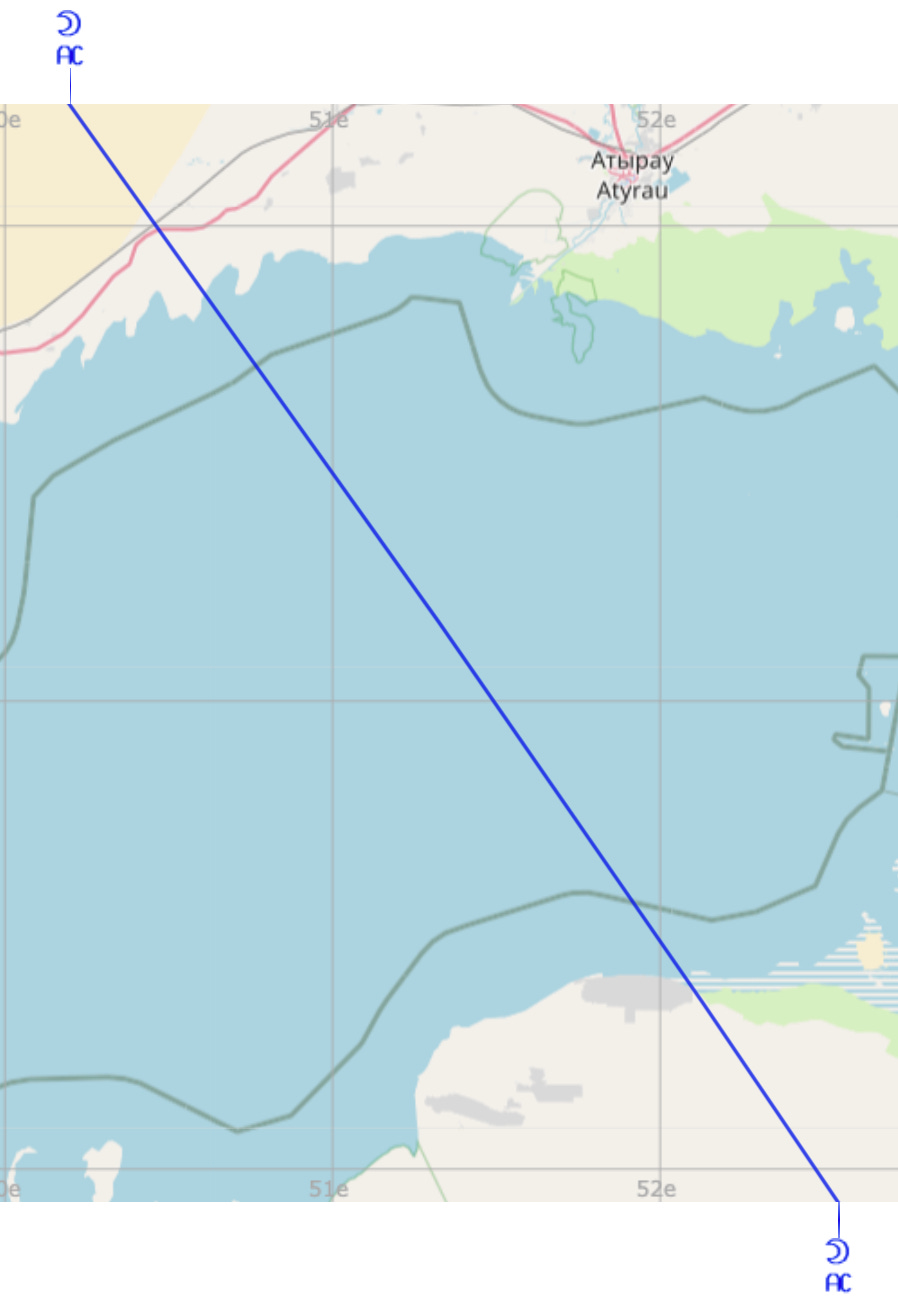
Angelica came to our session carrying three places that had been doing something particular to her body for months, that wordless, recurring pull that doesn’t come from wanting. One was in Guyana. One was a city in the American South she couldn’t explain. And one was Panama. She hadn’t booked a flight to any of them. She hadn’t told anyone because it didn’t feel like information yet. It felt like weather.
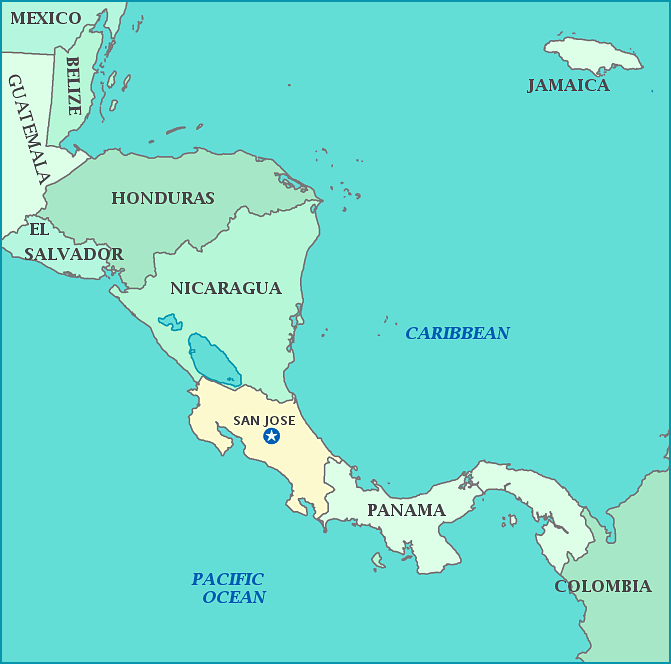
We opened her astrocartography map and there it was: her Moon line, specifically the IC angle, arcing through the isthmus of Panama. Striking right through that narrow bridge of land between the Caribbean Sea on one side and the Pacific Ocean on the other. What she’d been feeling for months wasn’t random. It was a psycho-geographical conversation already in progress. My job isn’t to create that relationship. It’s to translate it.
The Four Angles — What Each One Activates
A Moon line isn’t one line. It’s four, each one corresponding to a different angle of your natal chart and a different register of emotional activation. And they show up at least dozens of times throughout your entire map. The table below is a starting point. The lived experience is always more specific than any framework can hold.
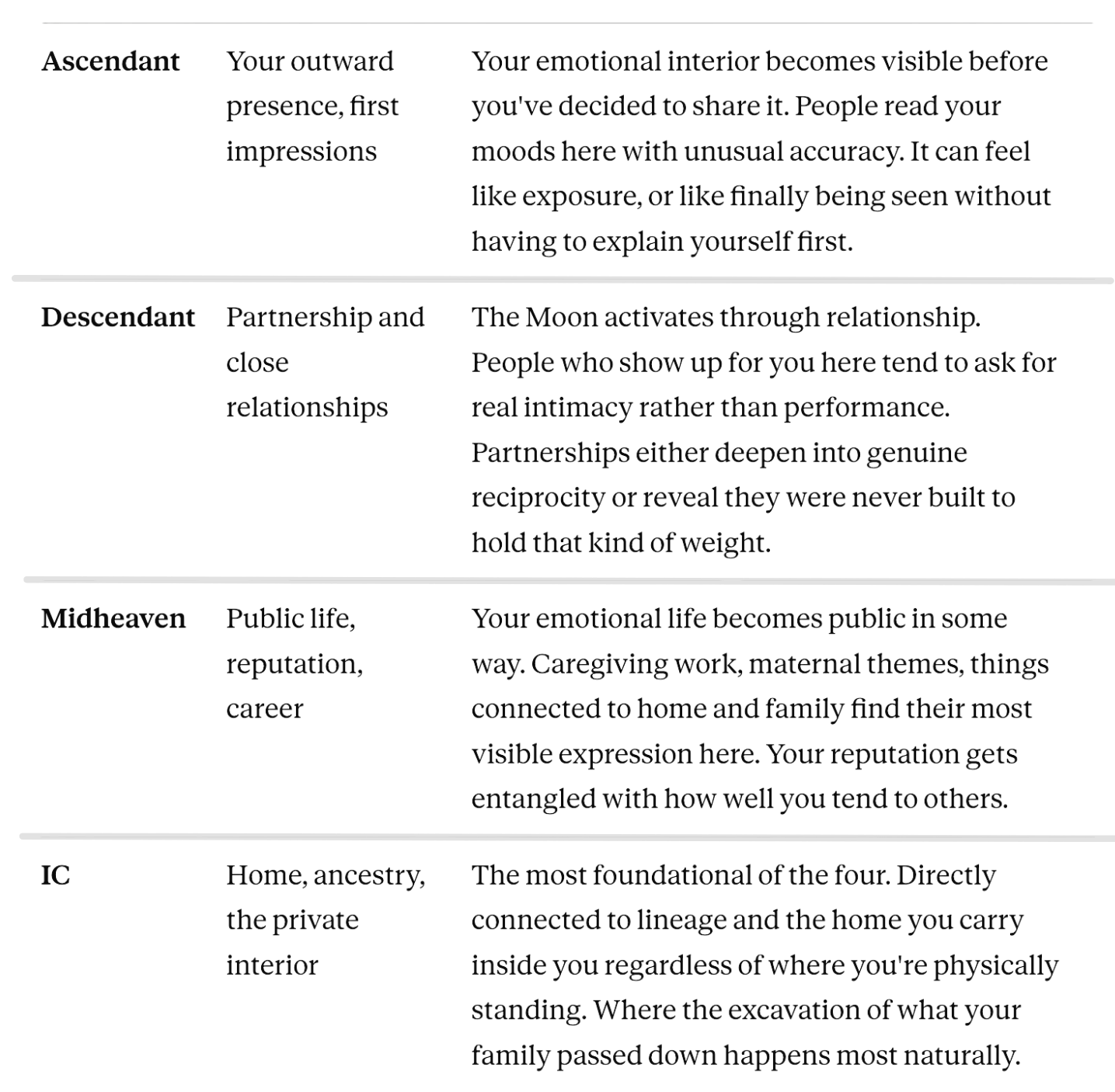
Angelica’s Moon was on the IC. Which means the place that had been calling her for months was not calling her toward rest. It was calling her toward the deepest layer of excavation the map offers.
What the Moon Line Actually Requires
Moon lines are responsive. They’re not static frequencies you either benefit from or don’t. They change depending on what you bring to them: how clear your intention is, how honest you’re willing to be about what you need, and how prepared your emotional body is to receive what the land has available.
Traveling without intention can distort the medicine. A Moon line that activates grief without a prepared container becomes a loop: emotional stagnation, pining, overthinking every detail of the trip instead of being inside it. The line is only part of the story. Your relationship to the land, and to yourself inside it, is the container.
I ask every client to come to their Moon Lines session with at least three places they’re persistently feeling a mutual pull toward. Because the psycho-geographical conversation is already happening before I translate it. And researching those places, not just the logistics but the history, who tended the land, what it’s held and what it’s lost, is part of how you prepare to be received by it.
Some containers are better for some kinds of work than others. That’s not a failure of the line. It’s information.
Below the paywall: Angelica’s full journey between Panama City and El Valle de Antón, what the IC line asked of her in practice, how to read your Moon line in combination with other planetary placements in the same geography, and a step-by-step practice for working with your Moon line during the New Moon in Cancer on July 14th.
Keep reading with a 7-day free trial
Subscribe to Wayfinder’s Field Notes to keep reading this post and get 7 days of free access to the full post archives.