
Winning Is Exhausting
On EMDR, the window of tolerance, and what it costs your nervous system to finally arrive

Winning is exhausting.
Nobody tells you this. Or maybe people do and the telling doesn’t land until you’re inside it, until you’ve spent years building something and the thing is finally built and your nervous system is still bracing for impact because that’s the only mode it knows.
I’ve spent most of my adult life swimming upstream. An unconventional career that didn’t have a name when I started building it. Work as a healing practitioner in a world that wanted me to have a different kind of credential. Interests that required me to fight for space in conversations that were never designed to include me. A relationship with cartography that everyone around me found eccentric until the moment it became legible.

That upstream swimming built something real in me. A nervous system calibrated for resistance. A creative intelligence that learned to find the way through. I’m not interested in revising any of it. That water made me.
Every new level of winning requires new tools to sustain it. The tools that got you through the upstream are not the same tools that help you navigate the flow. And if you don’t build new ones, the body will keep using the old ones on a situation they weren’t built for. It’ll keep bracing when it could be receiving. It’ll keep scanning when it could be resting. It’ll keep managing what it could, instead, be enjoying.
I’ve been in a season of life-changing wins. A peer-reviewed publication. A keynote alongside scholars I deeply respect. Facilitating at an annual festival doing real work. A book talk for the 3rd edition of my Leyline Almanac. A documentary in post-production. Content reaching hundreds of thousands of people. A practice generating momentum I spent years building toward.
And underneath all of it, a persistent low-level buzz. A sense that something needs to be managed even when nothing needs managing. The body that learned to brace, bracing out of habit. That costs something. It takes up space the good things want to occupy.
I started EMDR therapy to work on that specifically.
EMDR (Eye Movement Desensitization and Reprocessing) is a trauma-focused therapeutic approach that uses bilateral stimulation to help the brain reprocess experiences that got stuck. What it actually feels like from the inside: you sit with something that’s been lodged in your body for a long time and you help it move.
I started this work to expand my window of tolerance — the zone of nervous system activation where you can function, feel, think, and engage without either shutting down or flooding. Everyone has one. Everyone’s is shaped by their history. If your history includes years of building something in conditions that required constant vigilance, your window calibrates accordingly. And when the conditions change, when the work starts meeting you, the nervous system doesn’t automatically update.
It keeps bracing. It keeps waiting for the catch.

What the New Season Asks For
I could tell the moment the new tools were needed because the old ones plateaued. The determination that had been an asset started feeling like static. The alertness that helped me navigate suspicious spaces started misfiring in landscapes that were actually safe.
So I started building a new toolkit. Not from scratch. From curiosity. From alchemy. From the same soil that’s been supporting me.
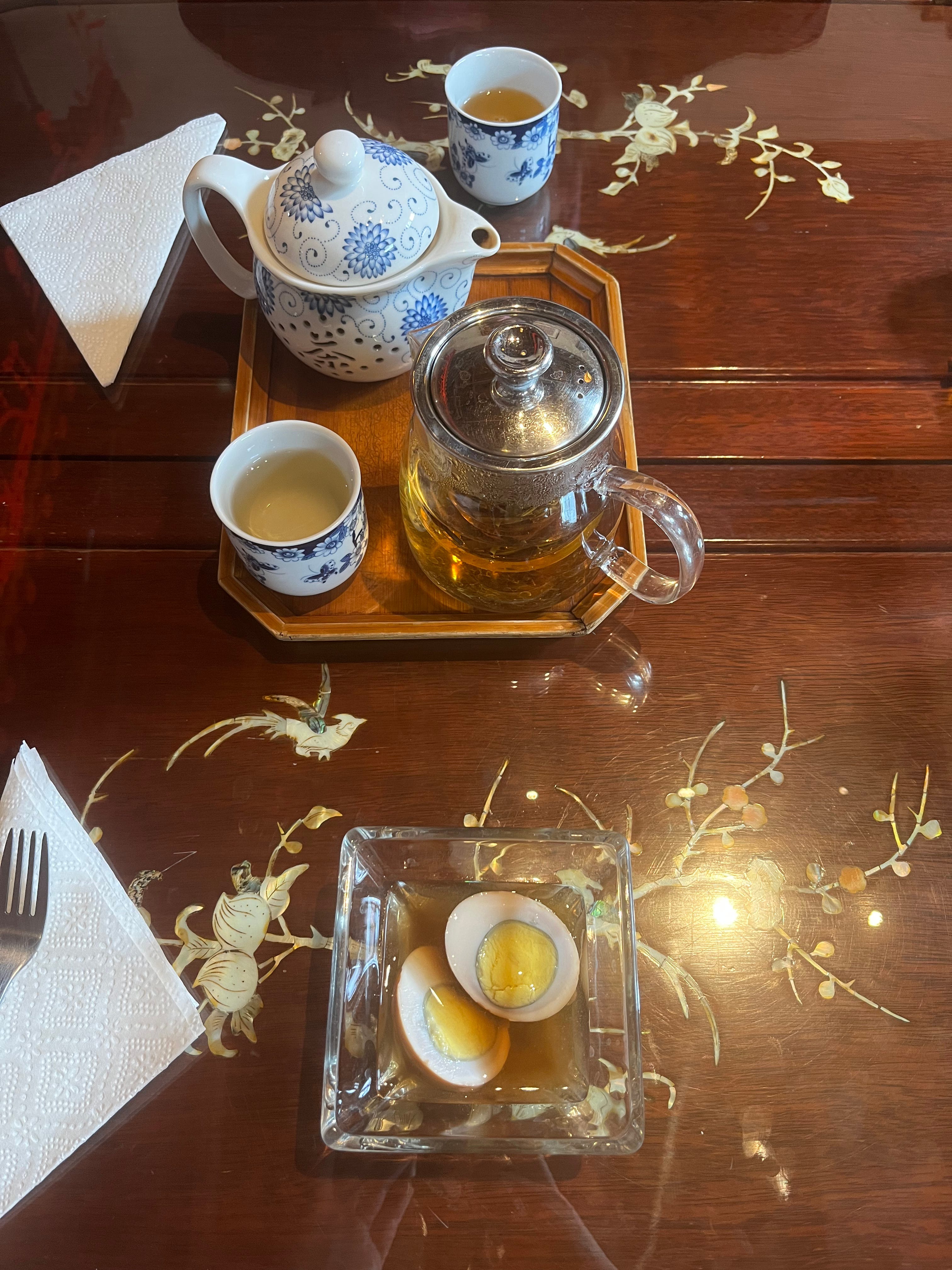
Frequenting my local Chinese tea house came before my EMDR sessions. There’s something about the ritual of that space, the ceremony of it, the particular quality of stillness it asks for, that my nervous system receives differently than almost anything else. It doesn’t ask me to produce. It asks me to be present. It shows me where my nervous system has been wound tight and it gently detangles it, inspiring new space and flow. Those are different requests and my body was starving for that last one.
Lavender became a constant: in tea, in juices, in long baths, as essential oil on my pulse points and in my diffusers. The research on lavender and the nervous system is real and the practice is even more real. Something in the scent tells my body it’s allowed to settle.
Hot sauna been in the rotation (shout out to my gym), but in this season, I’m being with it differently. Specifically for the emotional work. There’s a quality of transformation that heat creates in stagnant emotions that sitting with it in a talk session can’t fully replicate. The body sometimes needs to sweat something out rather than think it out.
I started putting nothing days in my calendar. Actual blank space. Days where I look ahead and see relief rather than obligation. It sounds simple and it took me longer than I’d like to admit to understand that my nervous system needed to see it on the page, needed the visual confirmation that the relentlessness had a break in it.
I’ve been blocking off time around the new and full moons for over four years now, and it’s the practice that’s stuck with me through every season and every pocket of my life. The moon gives me a container and I’ve learned to use it. That time belongs to my own work and my own devotion to self.
And I worship myself now, deliberately and without apology. Foot soaks. Body massages. Long skin care routines that aren’t rushed. Self-devotion is ancestral veneration too.
The practice I’m most tender about is what I call Saki Days. I pick an age, younger or older, and I take myself on a date with that age in mind. If I pick seven, I’m thinking about what seven-year-old Saki would have loved and I give her a version of it. If I pick sixty-five, I’m thinking about what that Saki would want to have already experienced and I give myself a preview. It’s time travel as self-care. And it’s one of the most direct ways I know to move across the timeline of my own life with intention rather than just momentum.
Each of these practices is doing the same thing from a different angle: teaching the body that safety is available, that rest is allowed, that the winning doesn’t have to be managed into submission before you’re permitted to feel it.
If the Me Today Had Me as a Child
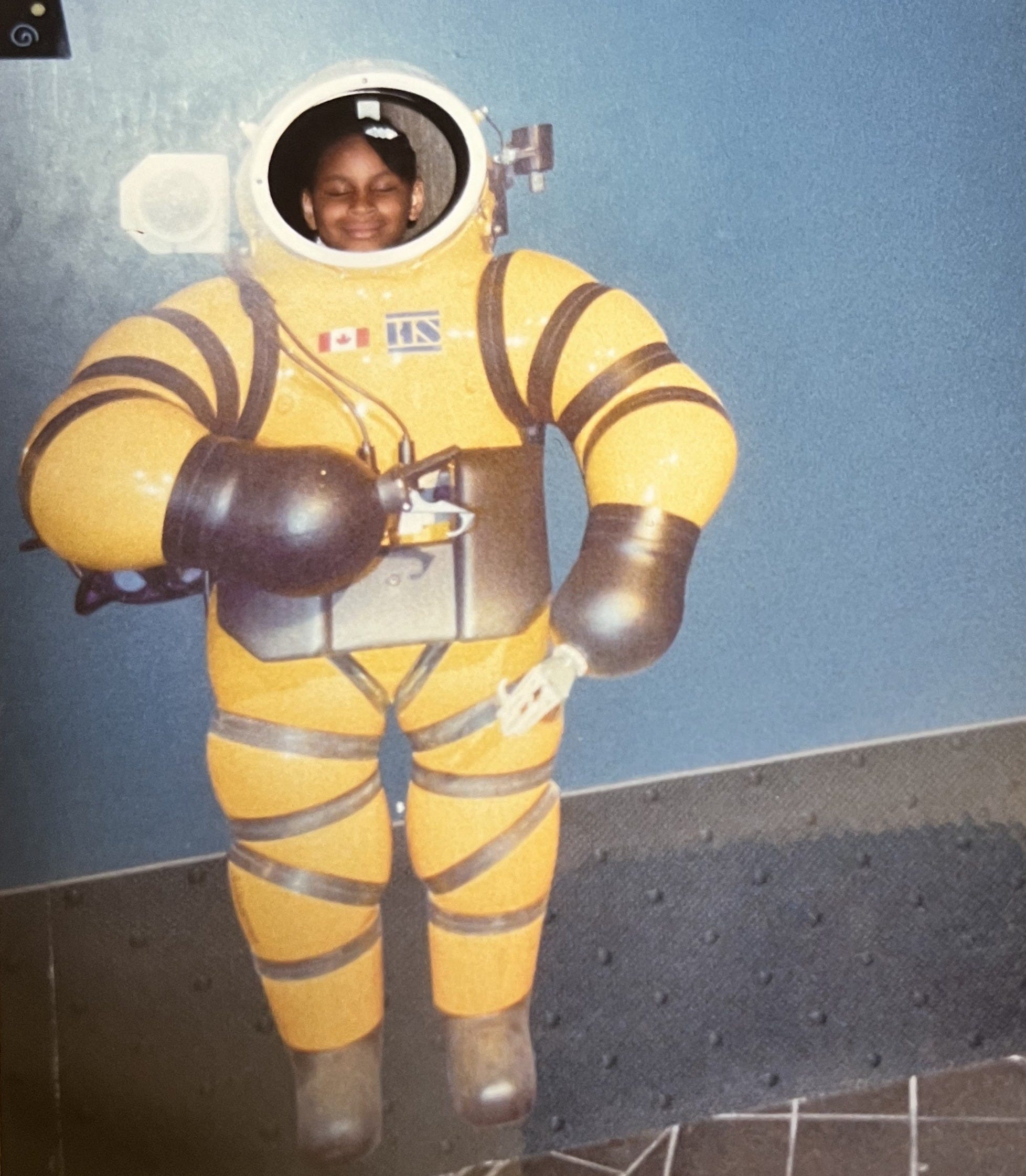
If the me today had me as a child, what would I do differently? How would I parent me?
My childhood is something I adore. My parents gave me things I carry with care, and everything that did or didn’t happen in my formation was instrumental for who I am now. This isn’t a revision and it isn’t an assignment of blame.
It’s a different question. Given everything I know now, given the tools I’ve built and the understanding I’ve accumulated, what could I offer a younger version of myself that wasn’t available then? What gaps exist in my emotional toolkit that I’ve been working around? And most specifically, what would it mean to fill them now, at this age, in this season?
Here’s what I’d give her:
I’d put her in a sport. Volleyball or lacrosse, something with a team, because the social architecture of team sports builds something that individual achievement doesn’t. The experience of being accountable to other people and having them be accountable to you. Learning to receive support. Understanding that your contribution matters to a collective and that other people’s contributions matter to you. I didn’t learn that early enough and I’ve been catching up ever since.
I’d take my time explaining the different aspects of girlhood and womanhood. Not the defensive framing, not the warnings, but the full and honest texture of it. What it means to inhabit a female body and move through the world in one. And what it means to move beyond femaleness and that I exist in a more fluid landscape of gender, most of us do. What the pleasures are and what the particular difficulties are. What to expect and what you’re allowed to expect.
And I’d be intimately involved in shaping her self-concept. I’d sit with her in front of mirrors and talk about what she sees. I’d name her gifts explicitly and repeatedly. I’d make sure she knew, from very early, that her particular way of being in the world was not an error to be corrected. That the unconventionality wasn’t a problem to be managed but a feature of the specific contribution she was built to make.
Mostly I’d give her more permission to receive. More practice tolerating abundance without scanning for the threat inside it. Less time teaching her to fight for space and more time teaching her what to do once she had it.
That’s the gap. Not a wound, exactly. An incomplete passage between fighting for your life and learning how to actually live it.
The other side of the reparenting question is the future self inquiry, and it turned out to be richer than I expected.
If my future self could send a message back to me in this current season, what would she want me to know? What would she wish I had built right now that she’s looking back on as foundational?
What keeps coming through is specific. She wants me to learn to receive praise without deflecting. She wants me to develop the practice of staying present in moments of recognition rather than moving quickly to the next thing. She wants me to build the capacity to sit inside my own success without narrating it to death or moving past it before it’s had a chance to land.
She also wants me to get better at being still. At tolerating the seasons when I’m not producing or building or moving. At trusting that root work — the EMDR, the fire ceremonies, the interior reckoning — is as real and as valuable as the visible output, even when it produces nothing you can post or share.
These questions become portals when you ask them sincerely. You start to understand that you’re not a single point in time making your way forward. You’re in active correspondence with every version of yourself that has ever existed and every version that hasn’t happened yet. That kind of map reveals that time and space are twins, and it’s just as navigable.

I keep seeing a container that’s been filled with specific substances for a long time. Survival responses. The particular flavor of alertness that upstream swimming requires. These substances weren’t bad. They served a function and they were appropriate to the conditions. But they take up room. When the conditions change, when the upstream season ends and a different season begins, the container needs to be emptied and refilled with something appropriate for the new terrain.
EMDR is, among other things, a process of completing the emotional experiences that once drove me. The vigilance that kept me sharp. The guardedness that protected something tender until it was strong enough not to need that level of protection. These experiences don’t need to disappear. They need to be completed. They need to move through the body all the way to their end so the space they occupied becomes available for something new.
What I’m making room for is a different relationship with success. With peace and tranquility (the meaning of my name). With the particular grace of seasons that don’t require constant management. With the ability to wake up and move through a day that is going well and actually feel it in my body, rather than waiting for it to stop.
The life I’ve been building deserves a version of me who can inhabit it fully.
The parent I’m becoming for myself is patient. She doesn’t rush the process. She knows the nervous system learns at its own pace and you can’t force expansion any more than you can force a plant to bloom ahead of it’s season.
She’s also honest. She doesn’t let me skip the parts I’d rather skip. She sits with me in the discomfort of incomplete emotional experiences and stays there until they finish.
And she celebrates. Not loudly or performatively, but genuinely. She pauses at the moments worth pausing at. She lets the wins land before moving to what’s next.
She models a relationship with the work that includes receiving it, not just building it.
If any of this is resonating and you want support doing this kind of work in a structured container, Elemental Directions is the place to start. Two sessions a month. Six life territories. Elemental medicine as the guiding framework. It’s for people who are ready to go deep on what it actually means to expand their bandwidth for the life they’ve been building.
Book a session at Compass Collective. Learn more about EMDR therapy through EMDRIA.
EMDR changed my life.